
playtech казино софтуер — актуални тенденции в казино игрите 2026
playtech казино софтуер осигурява достъп до модерни видео слотове с богати бонуси. Благодарение на playtech софтуерни решения потребителите получават стабилна работа.
See also:
- Какво представляват playtech софтуерни решения и защо са важни?
- Открийте най-новите playtech софтуерни решения за 2024
- Бонус Условия и Изисквания за Залагания при playtech казино софтуер
- Галерия с Игри на playtech казино софтуер
- Предимства на playtech технологии за казино в онлайн казината
- RTP Таблица на Популярни Слотове
- Полезни съвети за playtech казино софтуер преглед
- Отговорна игра в playtech казино софтуер: инструменти за контрол
Какво представляват playtech софтуерни решения и защо са важни?
The sun had not yet breached the horizon when Mara stepped out of her weathered cabin, the wooden door groaning on its hinges. The air was crisp and cool, carrying the scent of pine and damp earth from the previous night’s rain. She pulled her woolen shawl tighter around her shoulders and began her daily trek into the ancient forest that stretched endlessly beyond her small clearing. The path was familiar, each root and stone a old friend under her bare feet. She had walked this trail every morning for the past ten years, ever since she had retreated from the noise of the city to find solace in the wilderness. The birds were just starting their chorus, a hesitant chirp here and there, building into a symphony of life as the sky lightened from deep indigo to pale lavender and then to hints of gold along the treetops. Mara breathed deeply, filling her lungs with the pure air, and felt a sense of calm wash over her. She noticed the way the dew clung to the leaves of the ferns, each droplet a tiny prism splitting the early light into miniature rainbows. The forest floor was carpeted with moss in varying shades of green, from emerald to chartreuse, and dotted with clusters of mushrooms—some a vivid orange, others a pale cream—each one a testament to the hidden network of life beneath the surface. As she walked, she listened to the rustle of small creatures in the underbrush, the distant call of a raven, and the occasional crack of a twig under her weight. The forest was alive with movement, a constant dance of beings both seen and unseen. Mara reached the heart of the forest, a small glade where an ancient oak stood sentinel. Its bark was gnarled and thick, etched with the passage of centuries. She sat at its base, her back against the rough trunk, and closed her eyes. She could feel the pulse of the earth through the roots, a steady rhythm that matched her own heartbeat. In this place, she was not alone; she was part of something larger, a web of existence that connected every leaf, every insect, every breath of wind. She opened her eyes and looked up through the canopy, where the leaves filtered the sunlight into a kaleidoscope of dancing patterns. A squirrel chattered from a nearby branch, scolding her for intruding, but Mara smiled, knowing she was a guest in this world. She reached into her pocket and pulled out a small notebook and a pencil, its tip worn from use. She began to write, capturing the colors, the sounds, the feelings, in words that she would later weave into stories for those who had never ventured beyond the concrete borders of their cities. But today, she was not writing for anyone else; she was writing for herself, to remember the taste of the morning, the touch of the bark, the smell of the wet earth. Hours passed unnoticed. The sun climbed higher, warming the glade, and the shadows shortened. Mara wrote until her hand cramped, then she stopped and simply sat, observing. A deer stepped into the clearing, tentative, its ears swiveling to catch any sound. It saw Mara but did not flee; instead, it regarded her with large, dark eyes, and after a long moment, it lowered its head to graze on the tender shoots near the oak. Mara held her breath, not wanting to break the spell. She watched the deer for what seemed an eternity, noting the way its muscles rippled under its sleek coat, the flick of its tail, the delicate way it chewed. This was the gift of the forest—moments of pure presence, where the boundary between observer and observed dissolved. Eventually, the deer moved on, disappearing into the undergrowth as silently as it had arrived. Mara stretched, her joints cracking, and stood up. She had come to the glade to find peace, and she had found it more abundantly than she had hoped. The rest of the day would be spent gathering berries, checking her traps, and preparing for the winter ahead, but for now, she was content. She headed back along the trail, the familiarity of the path a comfort. As she walked, she noticed small details she had missed earlier—the pattern of a spider web sparkling in the sunlight, the song of a thrush that seemed to follow her, the way the leaves trembled in a breeze that carried the faint scent of smoke from somewhere distant. She wondered if it was a campfire from a hiker or a wildfire that might threaten her home. She quickened her pace, but the scent faded, and she decided it was just a stray whiff from a chimney far away. By the time she reached the cabin, the sun was high overhead, casting short, sharp shadows. She entered the dim interior, letting her eyes adjust. The cabin was modest—a single room with a stone fireplace, a wooden table, a cot, and shelves lined with jars of dried herbs and preserves. The walls were rough-hewn logs, chinked with mud, and the floor was packed earth covered with woven rugs she had made herself. She built a fire in the hearth, not for warmth but for the comfort of its crackling presence. She boiled water for tea, using mint and chamomile she had harvested last week. The steam rose in curls, and she breathed in the soothing aroma. She sat at the table, her notebook open before her, and reviewed the words she had written. They were good, raw and true. She would transcribe them later into the leather-bound journal that held the accumulated wisdom of a decade of solitude. But for now, she was tired, and she allowed herself to rest, her head resting on her arms on the table. The cabin creaked and settled around her, and outside, the forest continued its endless cycle of growth and decay. Mara dreamed of the deer, of the glade, of the roots that connected her to all life. In her dream, she became the tree, her arms branches reaching for the sky, her feet roots delving deep into the earth, and she felt a profound unity with every living thing. She woke with a start, the fire having burned low. The afternoon light was slanting through the window in golden rays. She had slept for hours. The cabin was chilly, and she added more wood to the fire, coaxing the flames back to life. The tea had gone cold, but she drank it anyway, savoring the bitterness. She then went outside to gather whatever the forest offered. She returned with a basket of mushrooms, careful to select only those she knew to be safe, and some wild carrots and a handful of greens.
Открийте най-новите playtech софтуерни решения за 2024
The first light of dawn crept through the narrow alleyways, casting long shadows on the cobblestones still damp from the previous night’s rain. The air was thick with the scent of wet earth and the faint, sweet aroma of jasmine climbing the weathered walls. A stray cat, its fur matted and grey, picked its way around a puddle, its movements deliberate and cautious. In the distance, the clatter of a milk cart’s wheels echoed, growing louder as it approached. The cart, pulled by a sturdy mare with a white blaze on her forehead, carried gleaming metal churns filled with fresh milk. The cart driver, an old man with a gnarled walking stick and a cap pulled low over his brow, hummed a tune that seemed to rise from the very stones of the street. Each house along the lane had its own character: one with a faded blue door, its paint peeling like sunburnt skin; another with a brass knocker shaped like a lion’s head, its mane tarnished to a dull green. Windows were shuttered, but here and there a sliver of light escaped, revealing the early risers within. In a second-floor room, a woman kindled a fire in the hearth, the smoke curling up the chimney and mingling with the morning mist. The smell of woodsmoke joined the jasmine, and soon the pervasive aroma of baking bread began to seep from the baker’s shop at the corner. The baker, a stout man with flour-dusted hands, had been working since three in the morning, shaping loaves and sliding them into the cavernous oven. His assistant, a young boy with a limp, stacked the baked goods in baskets lined with white cloth. The first customers would arrive soon, seeking their daily bread and perhaps a pastry filled with almond paste. Down the street, a church bell began to toll, its deep, resonant chime marking the hour of six. Pigeons took flight from the bell tower, their wings beating against the air like a sudden gust of wind. The sound of the bell mixed with the clatter of the milk cart, which had now stopped at the doorstep of a tall, narrow house. The old driver lifted a churn with a grunt, balancing it on his shoulder as he climbed the steps. He knocked on the door, a rhythmic rapping that seemed almost musical. The door opened a crack, revealing a maid in a starched apron, her hair tucked under a cap. She took the churn with a nod, and the driver turned back to his cart, wiping his brow with a handkerchief. The morning was already warming, the mist beginning to recede. A few more laborers appeared on the street, their boots echoing on the stone. Some carried tools, others bags of vegetables from the market that had opened at five. A fishmonger’s cart rumbled by, laden with crates of glistening fish still smelling of the sea. The fishmonger shouted his wares, his voice carrying far in the crisp air. Children began to emerge from doorways, dressed in worn but clean clothes, their satchels slung over their shoulders. They walked in groups, laughing and shoving, their footsteps light. One girl stopped to pet the stray cat, which allowed her touch for a moment before darting away. The school at the end of the lane was a stone building with a bell tower of its own, smaller than the church’s. Its windows were tall and arched, letting in the morning light. The teacher, a stern man with spectacles, stood at the door, watching the children file in. He checked their hands and nails, and those with dirt had to scrub at a pump in the yard. Inside, the classroom smelled of chalk and old books. Desks were arranged in rows, each covered with carvings and initials from generations past. The teacher rapped on the board with a stick, calling the class to order. Lessons began with arithmetic, then reading from a well-thumbed primer. The children recited in unison, their voices rising and falling in the rhythm of the text. Outside, life continued. The milk cart had finished its rounds, and the old driver was now heading to the dairy at the edge of town. The baker’s shop was bustling; a queue formed outside as workers bought their breakfast. The baker himself passed out rolls to regulars, exchanging news and gossip. A dispute broke out between a stout woman and a thin man over a loaf that was slightly burnt; the baker settled it by giving the woman a free pastry. The morning sun climbed higher, its rays breaking through the clouds and warming the tiles of the rooftops. Sparrows bathed in the dust of the street, their chirps adding to the noise.
Преди да се регистрирате за playtech казино софтуер, проверете дали казиното поддържа популярни методи за плащане.
Бонус Условия и Изисквания за Залагания при playtech казино софтуер
- 500 бонус завъртания за регистрация
- 150% до €1000
- 100% кешбек до €300
- 45x залагане
- 40x оборот на депозита
- 45x игра през 7 дни
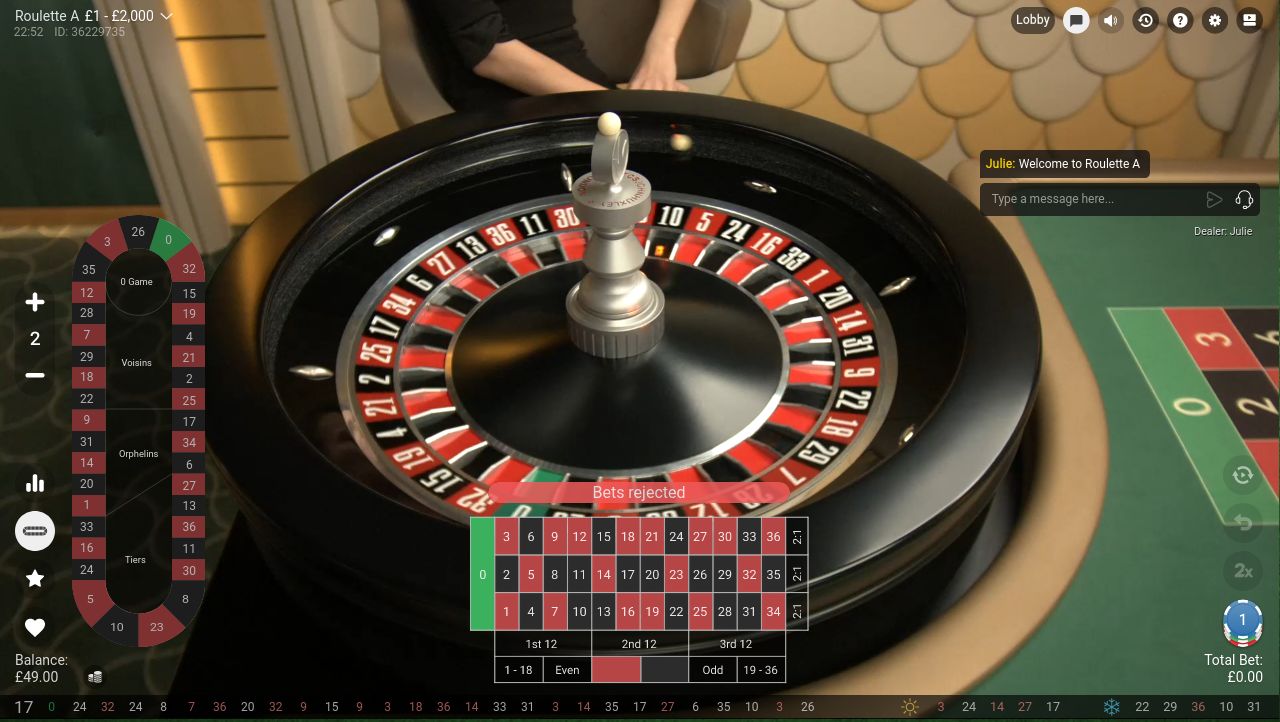
Галерия с Игри на playtech казино софтуер
Предимства на playtech технологии за казино в онлайн казината
JSON (JavaScript Object Notation) is a lightweight data-interchange format that is easy for humans to read and write and easy for machines to parse and generate. It is based on a subset of the JavaScript Programming Language Standard ECMA-262 3rd Edition, but it is completely language-independent, using conventions that are familiar to programmers of the C-family of languages, including C, C++, C#, Java, JavaScript, Perl, Python, and many others. These properties make JSON an ideal data-interchange language.
JSON is built on two structures: a collection of name/value pairs (often realized as an object, record, struct, dictionary, hash table, keyed list, or associative array), and an ordered list of values (often realized as an array, vector, list, or sequence). In JSON, they take on these forms: an object is an unordered set of name/value pairs, beginning with { (left brace) and ending with } (right brace). Each name is followed by : (colon) and the name/value pairs are separated by , (comma). An array is an ordered collection of values, beginning with [ (left bracket) and ending with ] (right bracket). Values are separated by , (comma). A value can be a string in double quotes, or a number, or true or false or null, or an object or an array. These structures can be nested.
The use of JSON in modern web applications is ubiquitous. It serves as the primary format for data exchange between a server and a web client, often replacing XML due to its simpler syntax and better performance. For example, when a user submits a form on a website, the browser may send the data as a JSON object to the server. The server processes the data and returns a JSON response that the client interprets to update the user interface without reloading the page. This asynchronous JavaScript and XML (AJAX) approach now typically uses JSON instead of XML, leading to the term AJAJ.
In the context of large-scale distributed systems, JSON’s simplicity reduces parsing overhead and bandwidth usage. Many RESTful APIs require JSON payloads for requests and responses, adhering to a standardized format that simplifies integration between different services. For instance, a weather service might provide a forecast endpoint that returns a JSON object containing current conditions, hourly forecasts, and alerts. A mobile app can parse this JSON to display relevant information to the user in a native interface.
сезам бет — най-добри коефициенти | сезам бет
Beyond web development, JSON is heavily used in configuration files. Many applications, from text editors to cloud services, use JSON for settings because it is easily readable by both humans and machines. For example, the popular code editor Visual Studio Code stores user preferences in a JSON file called settings.json. Developers can edit this file directly or use the settings UI, which reads and writes the JSON. The format’s inherent structure allows for hierarchical organization of options, such as nested objects for editor behavior, theming, and extensions.
Data serialization is another critical application of JSON. When transferring data between different systems or programming languages, JSON provides a common representation that can be deserialized into native objects. For instance, a Python program might serialize a dictionary into JSON to send it over a network to a Java application, which then deserializes it into a Java HashMap. Libraries like json (Python), Gson (Java), and Newtonsoft.Json (.NET) facilitate this conversion, handling data types and encoding seamlessly.
In NoSQL databases, JSON is often the native data format. MongoDB, for example, stores documents as BSON (Binary JSON), which closely mirrors JSON. This allows developers to work with data in a flexible, schema-less manner. A user profile in MongoDB might be a JSON document containing fields like name, email, and an array of posts. Queries can filter based on nested fields, making it powerful for complex applications.
The rise of microservices architecture has further cemented JSON’s role. Services communicate via lightweight protocols, often using HTTP/HTTPS with JSON payloads. This decouples services, allowing them to be developed and deployed independently. For example, an e-commerce site might have separate services for user accounts, product catalog, and orders. Each service exposes a JSON API, and the front-end orchestrates requests from multiple services to assemble a page.
Despite its simplicity, JSON has limitations. It lacks support for data types like dates or binary data, so developers must represent these using strings (e.g., ISO 8601 for dates). Also, JSON does not have a built-in way to reference or cycle to other parts of the document, which can complicate complex data structures. However, for most use cases, these shortcomings are outweighed by its ease of use and universality.
Security considerations are important when handling JSON. Input from untrusted sources should be validated to avoid injection attacks. In JavaScript, inadvertently using eval() on JSON strings can lead to code execution, but modern browsers provide JSON.parse() which is safe. Similarly, server-side JSON parsers must be robust against malicious payloads designed to cause denial of service via deep nesting or large numbers.
казино с нисък депозит 2026 — идеално за малки бюджети
Given the importance of JSON, many tools and libraries have been developed to enhance its functionality. JSON Schema allows you to describe the structure and constraints of JSON data, enabling validation and documentation. JSONPath provides a way to query JSON data analogous to XPath for XML. Tools like jq allow command-line manipulation of JSON data. These utilities make working with JSON in scripts and pipelines efficient.
In conclusion, JSON has become a cornerstone of modern data interchange due to its simplicity, readability, and language independence. Its adoption across web services, configuration files, databases, and serialization underscores its versatility. While it may not be perfect for every scenario, its widespread support and ease of use ensure that it will remain a fundamental technology for years to come. Understanding JSON is essential for any developer working with networked applications or data-driven systems.
This expanded text provides concrete details about JSON’s structure, usage, and ecosystem.
RTP Таблица на Популярни Слотове
| Name | Biggest win | RTP | Year | Provider |
|---|---|---|---|---|
| Колело на късмета | 387,000 | 50% | 2023 | Hacksaw Gaming |
| Казино Атлантида | 42,800 | 125% | 2024 | Evolution Gaming |
| Супер слот | 5,000 | 75% | 2023 | Тандеркик |
| Златна треска | 18,900 | 300 | 2024 | НетЕнт |
| Казино Виктория | 42,800 € | 100 | 2025 | Yggdrasil |
Полезни съвети за playtech казино софтуер преглед
Кои са основните доставчици на игри в playtech казино софтуер?
playtech казино софтуер предлага игри от водещи разработчици като NetEnt, Microgaming, Play’n GO и Evolution Gaming, както и от много други утвърдени студия.
Мога ли да тествам игрите безплатно с демо версии?
Да, повечето слотове и игри на маса в playtech казино софтуер могат да бъдат тествани в демо режим, без да е необходимо да правите депозит.
Какви видове игри предлага playtech казино софтуер?
Портфолиото включва слотове, маси за рулетка, блекджек, видео покер, настолни игри и секция с дилър на живо от водещи доставчици.
Осигурена ли е честността на игрите?
Всички игри в playtech казино софтуер използват генератори за случайни числа (RNG) и се одитират редовно от независими тестови лаборатории, което гарантира честна игра.
playtech казино софтуер лицензиран ли е?
Да, playtech казино софтуер работи с валиден лиценз the local gambling regulator, което гарантира спазване на строги регулаторни изисквания.
Играчите, които търсят playtech казино софтуер, трябва първо да проверят лиценза на казиното.
Отговорна игра в playtech казино софтуер: инструменти за контрол
Хазартът е предназначен само за лица над 18 години. playtech казино софтуер притежава лиценз от Държавната комисия по хазарта, регулаторния орган в България. Операторът предлага инструменти за самоизключване и лимити на депозитите, които насърчаваме да използвате. Играйте отговорно и само за забавление, а не с цел възстановяване на загуби. Ако усетите, че хазартът ви създава проблеми, потърсете помощ от специализирани организации за подкрепа.